Meme coin trading on Solana launchpads versus copy trading and why speed beats following wallets
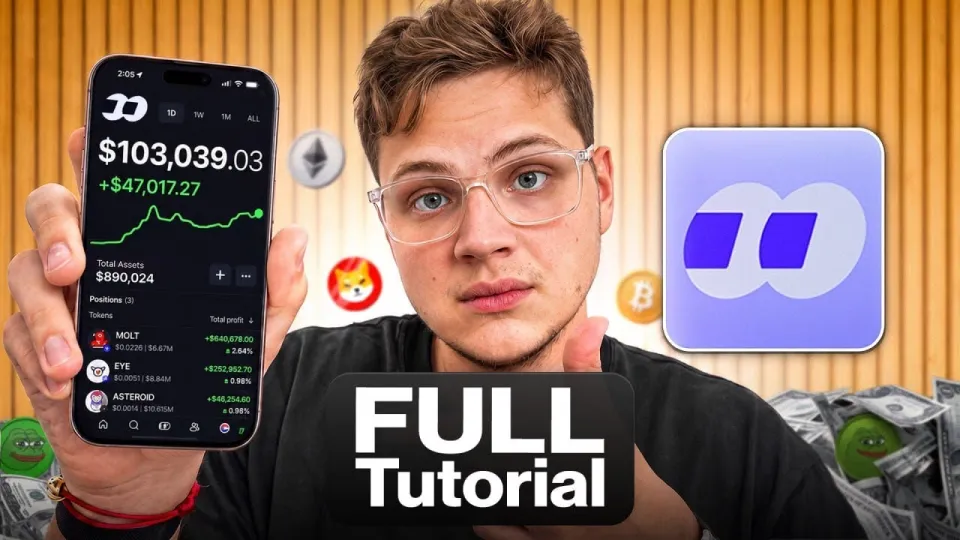
Video: How To Make Money Trading Memecoins (fomo app tutorial)
Want articles like this for your own video to promote it on YouTube and Google? Order them through the Telegram bot @sat_sit_bot. The bot writes and publishes the articles itself (with your YouTube video embedded) on popular topical websites (no ads). Your first 50 articles are free.
· based on the channel Orangie Web3
A meme coin is a crypto token whose value rests entirely on community attention and liquidity rather than on revenue, and the fastest way to trade it is a Solana launchpad paired with a low-fee wallet, not by copying other people's wallets. Speed of discovery and execution decides the outcome, because a meme coin's price can multiply or collapse within minutes of listing. The workflow shown in the Orangie Web3 tutorial relies on the fomo trading app, which combines token discovery, charts and one-tap buying in a single interface.
What a meme coin actually is and where it comes from
A meme coin is a token with no product, no cash flow and no roadmap that matters; its price is a pure function of how many buyers arrive and how much liquidity sits in the pool. Most new tokens on Solana are minted through launchpads, where a token starts on a bonding curve and only migrates to a decentralized exchange once it attracts enough buying. That structure explains both the appeal and the danger: entry costs are tiny, the supply is fixed at mint, and the creator can hold a large share from the first block.
Key mechanics worth knowing before the first trade:
- Bonding curve — the price rises automatically with each buy until a threshold is reached; after migration, price is set by an open order book or AMM pool.
- Liquidity lock — if the pool is not locked or burned, the creator can pull it and the token goes to zero in one transaction.
- Holder distribution — a handful of wallets holding more than 15–20% of supply can dump on every new buyer.
- Contract checks — mint authority and freeze authority should be revoked; on Solana this takes seconds to verify.
How the fomo app fits into a meme coin workflow
The fomo app is a trading front end for Solana meme coins that shortens the path from spotting a token to owning it, which is the part of the process where most beginners lose money. Instead of juggling a launchpad tab, a charting site and a wallet extension, the trader sees new and trending tokens, a price chart and a buy button in the same place. Registration through the affiliate link also routes a share of trading fees back to the referrer, which is why creators promote it so heavily.
A practical sequence for a first session:
- Create or connect a Solana wallet and fund it with a small amount you are willing to lose entirely — a common starting point in the community is around $50–100.
- Set slippage deliberately: 1–3% for liquid tokens, higher only when you accept that you may fill at a worse price.
- Sort by trending or newest, open the chart, and check the age of the token and the size of its liquidity.
- Buy a fixed small size, then immediately place a mental or actual exit plan — most traders use a 2x partial and a trailing stop on the rest.
- Sell in portions rather than all at once; thin pools punish large market sells with heavy slippage.
Why copy trading meme coin wallets usually arrives too late
Copy trading looks like the simplest strategy and is the most misunderstood, because a visible wallet is a record of decisions already made. Large traders frequently accumulate on a separate wallet before buying from the wallet their followers watch, so the copy order lands after the price has already moved. By the time a copied buy executes, the original buyer may be selling into that demand — the follower becomes the exit liquidity.
What to do instead of blind copying:
- Treat whale wallets as a research signal, not a trigger: check what they bought, how early, and whether the token still has room.
- Track the age of a position; entering a token that is already up 10x means you are buying someone else's profit.
- Watch holder concentration and recent large sells before entering any token a big wallet just bought.
- If you do follow wallets, size the position as if you are the last buyer, because often you are.
Position sizing and exit rules that keep a meme coin account alive
Risk management is the only part of meme coin trading that can be taught reliably, because entries are mostly luck and exits are mostly discipline. A workable rule set is to risk 1–5% of the trading wallet per token, never add to a losing position, and define the exit before the buy. Volatility on new Solana tokens routinely runs 50–90% in an hour, so a position that feels small at entry can still dominate the portfolio by the end of the day.
A concrete framework:
- Split the wallet into ten equal units and treat one unit as the maximum single bet.
- Sell half at 2x, recover the initial stake, and let the remainder run with a stop at breakeven.
- Set a time limit — if a token has not moved within the first hour of holding, exit and redeploy.
- Keep a written log of every trade with entry, exit and reason; patterns appear within 20–30 trades.
- Withdraw profits periodically instead of compounding everything, since a single rug can erase weeks of gains.
Common doubts from new meme coin traders
The questions beginners ask most often are about safety, timing and whether the whole market is a trap, and each has a practical answer. Concerns about drained wallets and "too good to be true" returns are legitimate: the losses usually come from signing malicious approvals, buying unlocked liquidity, or holding through a developer dump. The honest framing is that meme coins are a high-variance game where the majority of tokens go to zero and profits come from a small number of outsized winners plus strict sizing.
A few recurring points:
- Price alerts are the most requested feature on social trading apps; until they exist, set alerts in a separate charting tool or check positions on a schedule.
- A wallet drain is rarely a market event — it is usually a malicious signature or a seed phrase exposed to a fake site.
- Trading small amounts first is not a limitation but the standard way to learn execution without paying tuition to the market.
- Expect losing streaks; a 30–40% win rate can still be profitable if winners are cut less early than losers.
Useful links
- fomo trading app registration and referral: https://fomo.family/r/orangie
- Community Discord for meme coin discussion: https://discord.gg/memecoins
- Creator's Instagram: https://www.instagram.com/instagram/../orangieyt/
Final takeaway
Meme coin trading rewards execution speed and position discipline far more than it rewards following other people's wallets, and the launchpad-plus-app workflow is the most direct route for a beginner. Start with a small wallet, verify liquidity and holder concentration before every buy, and decide the exit before the entry. The fomo app removes friction between spotting a token and trading it, which is exactly where the edge sits — sign up through fomo.family/r/orangie and keep the first positions deliberately small. This breakdown follows the walkthrough published by the Orangie Web3 channel, which is worth watching for the interface steps in real time.
Key takeaways
- Meme coins are tokens with no cash flow whose price depends only on attention and liquidity, so speed of execution matters more than analysis.
- Launchpads such as pump.fun let anyone mint a token in minutes; most graduate to a DEX only after hitting a bonding-curve threshold.
- Copy trading a large wallet usually means buying after that trader's earlier entries, which is why followers often become exit liquidity.
- The fomo app bundles discovery, charting and one-tap buying on Solana and runs an affiliate program through fomo.family/r/orangie.
- Risk control is the edge: fixed position size of 1–5% of the wallet, pre-set take-profit levels and a hard stop on time spent per trade.
Questions & answers
Is meme coin trading profitable for beginners?
For most beginners it is not profitable at first, because losses from rugs, slippage and late entries outweigh early wins. Profitability usually appears only after strict position sizing of 1–5% per trade and a habit of taking partial profits. Treat the first months as paid practice with money you can lose entirely.
Why does copy trading a big wallet often lose money?
A visible wallet shows trades that have already happened, and large traders often buy first on a separate wallet before buying from the one followers watch. Your copied order executes after the price has moved, so you can end up buying the exit liquidity of the trader you copied. Use whale wallets as research signals rather than automatic triggers.
How much should I start with on a Solana meme coin app?
A common starting range in the community is $50–100, split into small units so no single token can wipe the account. The exact amount matters less than the rule that one trade risks no more than a few percent of the total. Fund only with money whose complete loss would not change your finances.
What are the biggest red flags before buying a new meme coin?
Unlocked or unburned liquidity, a small number of wallets holding a large share of supply, and active mint or freeze authority are the main warning signs. A token that has already multiplied several times before you found it is also a red flag, since you would be buying late. Checking these takes under a minute and prevents most catastrophic losses.
Source: How To Make Money Trading Memecoins (fomo app tutorial) · Markdown version